A redesign of two Advanced Placement courses is underway to address generative artificial intelligence (AI). New approaches to AI instruction, student assessment, and teacher training will launch in the 2027-28 school year, according to an announcement from the College Board, the nonprofit organization offering the SAT and AP courses.

Oregon Gov. Tina Kotek issued an executive order on Sept. 23 directing the state to develop new procurement safeguards for advanced artificial intelligence systems, including standards for independent safety reviews and an assessment of whether the state should require a “kill switch” for certain AI models.

Maryland Gov. Wes Moore announced a new artificial intelligence (AI) framework that outlines plans to regulate advanced AI systems, strengthen worker protections, and safeguard children using AI tools in schools and online.

Federal respondents reported more mature AI governance than their state and local counterparts, but both groups pointed to security, workforce, and infrastructure challenges as adoption expands.
The Massachusetts Institute of Technology (MIT) is calling for changes to its teaching, student assessment, and research as generative artificial intelligence (AI) becomes more integrated into academic work.
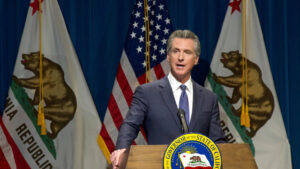
California Gov. Gavin Newsom issued an executive order on Sept. 18 that accelerates implementation of the state’s new artificial intelligence (AI) audit laws and directs officials to study additional safeguards for large frontier AI developers, including a potential requirement for an emergency kill switch.

The American Federation of Teachers (AFT), United Federation of Teachers (UFT), and Microsoft announced on Sept. 9 a national standard designed to give U.S. school districts enforceable artificial intelligence (AI) safety and data privacy protections for students, families, and educators.

The University of North Texas (UNT) received a $20 million gift to expand its artificial intelligence (AI) and advanced analytics programs, including student scholarships, research, faculty support, and emerging technology initiatives, the university announced Sept. 8.
California Gov. Gavin Newsom signed two bills into law on Sept. 9 that establish artificial intelligence (AI) safeguards. According to the governor’s office, the bills create a framework for independent third-party evaluation and audits of AI systems and establish a foundation for greater transparency and accountability as AI becomes increasingly embedded in critical sectors of California’s economy and public life.
The bipartisan proposal seeks to prepare students and teachers for wider AI use while keeping critical thinking at the center of the classroom.