From artificial intelligence (AI)-powered digital assistants that guide citizens through state portals to digital twins that model transportation infrastructure, state and local governments are finding practical pathways to put AI to work.

The Naval Postgraduate School (NPS) is building an artificial intelligence (AI)-ready force the way a teaching hospital trains clinicians: rigorous classroom learning, side-by-side practice on world-class technology, and real problems. Through its Artificial Intelligence Task Force (AITF), Digital Trident AI Challenge, and academic and leadership programs, NPS pairs tiered AI education with secure, scalable compute and operator-in-the-loop experimentation so students and faculty can turn promising ideas into useful capabilities that commands can adopt.

K-12 IT leaders overwhelmingly agree that artificial intelligence (AI) is vital for students’ success, but most districts are still stuck in pilot mode, according to new MeriTalk research.

State and local government IT leaders say the AI payoff is real – and mission-critical – but many efforts are stalling short of broad deployment, according to new MeriTalk research.

Higher education IT leaders are bullish on artificial intelligence (AI) but struggle to scale pilot projects organization-wide, according to new research from MeriTalk.
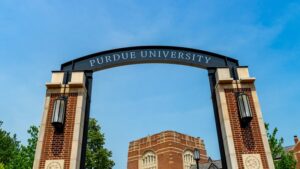
To support growing demand for accelerated computing for research across artificial intelligence (AI), semiconductor technology, quantum science, and beyond, Purdue University expanded its advanced computing resources through two key initiatives: Gautschi-AI and an expansion of the Anvil supercomputer to support the National AI Research Resource (NAIRR).
California State University (CSU) is using a public-private initiative to deploy artificial intelligence (AI) tools and trainings to a total of 523,000 people including 460,000 students and 63,000 faculty and staff.
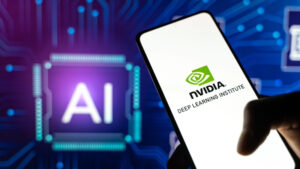
While the United States is home to more than half of the top universities in the world, there is more work to be done when it comes to artificial intelligence education – and that’s something NVIDIA is trying to improve. According to U.S. News & World Report, only 10% of the top global AI universities are in the United States.
Stay Connected

